BioCentral IB
C1.2.1
ATP is the cell's energy currency
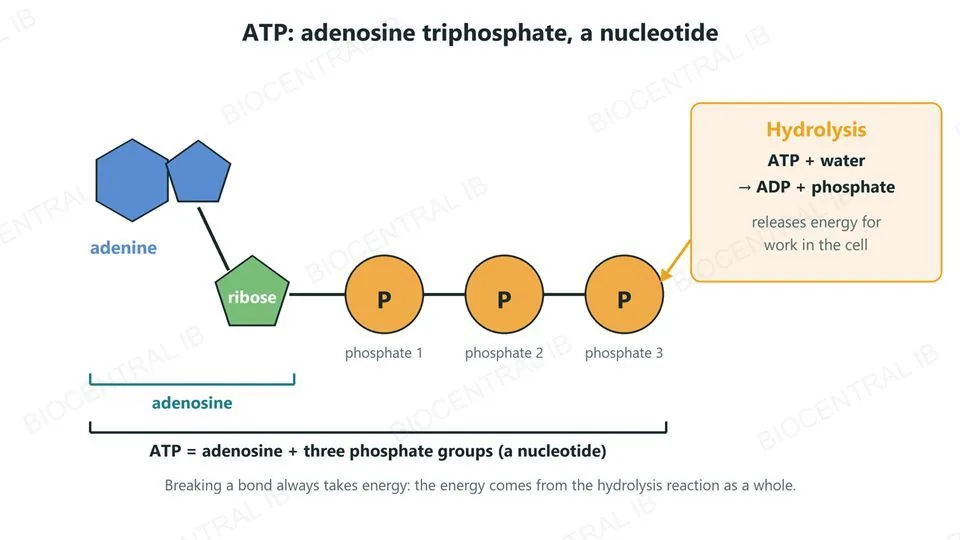
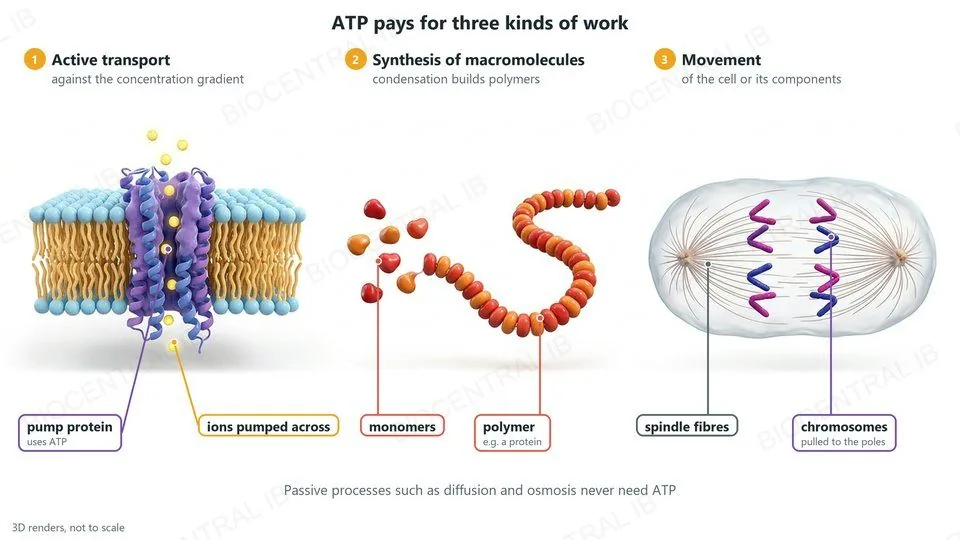
ATP (adenosine triphosphate) is a nucleotide that distributes energy within cells, carrying it from where it's released to wherever it's needed.
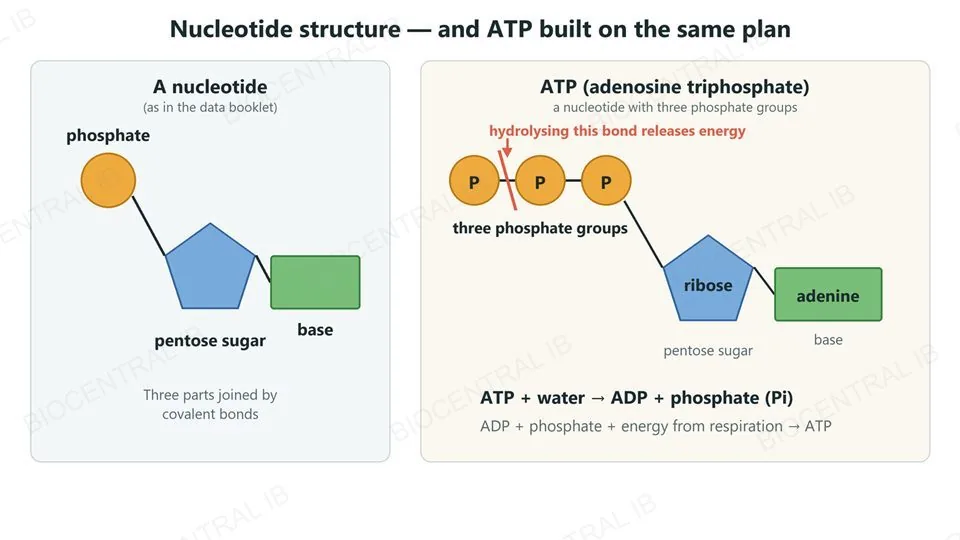
- ATP is built from the base adenine, the sugar ribose, and a chain of three phosphate groups — the same core structure as an RNA nucleotide, with two extra phosphates.
- It is small and water-soluble, so it diffuses quickly to any part of the cell that needs energy, rather than staying fixed in one place.
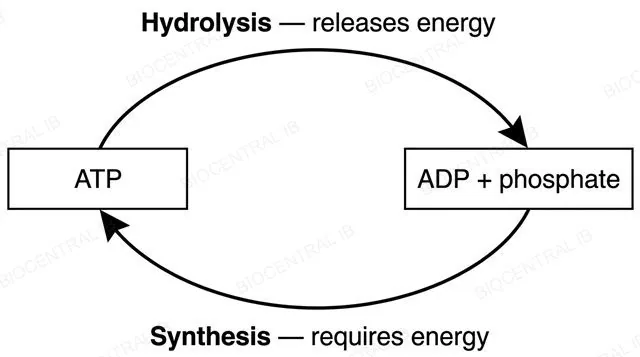
- Cells keep only a small ATP pool and continuously regenerate it from ADP (adenosine diphosphate) and phosphate, instead of stockpiling energy the way starch or fat is stored.
Why it mattersATP isn't valuable for holding unusual amounts of energy — it's valuable for being small, mobile, and constantly recycled.